
October 21, 1805221 years ago
Battle of Trafalgar
Key facts
- Location
Atlantic Ocean
off Cape Trafalgar, southwest of Cádiz, Spain
- Historical period
Napoleonic Wars
1803–1815
- Participants
British Royal Navy
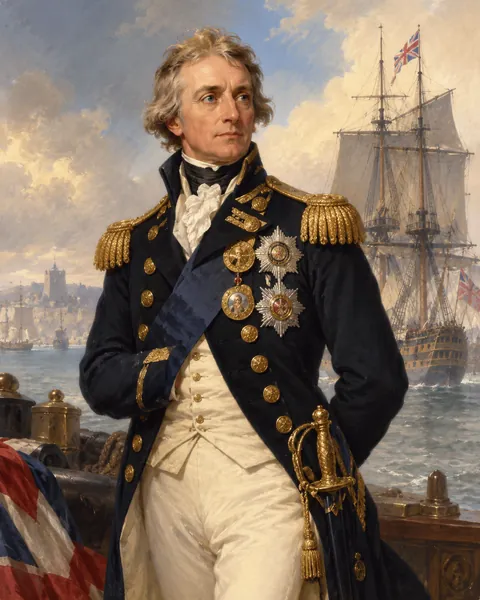 Horatio Nelson — Vice-admiral and commander
 Cuthbert Collingwood — Vice-admiral; commander of the second column
Combined French and Spanish fleet
 Pierre-Charles Villeneuve — Vice-admiral and commander
- Outcome
Decisive British victory
Nelson was fatally wounded; no British ships of the line were lost
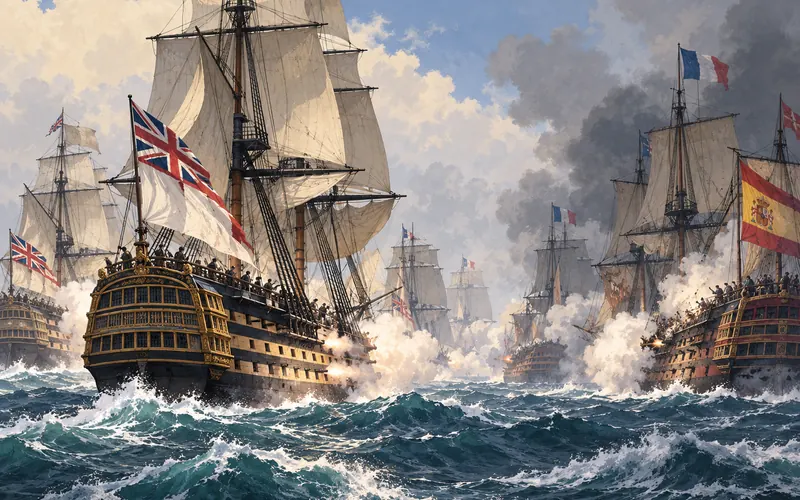
A British fleet commanded by Admiral Nelson defeated the combined French and Spanish fleets off Spain. Nelson died from wounds sustained during the battle.
Why the fleets met
In 1805, Britain and Napoleonic France were fighting a wider European war. Napoleon had considered invading Britain, but such a plan depended on controlling the waters of the English Channel. The Royal Navy therefore tried to contain the French fleet and prevent it from joining other forces at sea. Spain had allied with France, making the opposing force a combined French and Spanish fleet.
The allied fleet, commanded by Vice-Admiral Pierre-Charles Villeneuve, had taken shelter at Cádiz in southern Spain. Nelson’s force maintained watch offshore. When Villeneuve finally sailed out in October, the British intercepted him near Cape Trafalgar. On the morning of 21 October, the allied ships turned back towards Cádiz in light winds, still struggling to form a coherent battle line.
Nelson's unusual plan
Naval commanders usually arranged sailing warships in long parallel lines to exchange cannon fire from their sides. Nelson chose a more dangerous approach: he divided his 27 ships of the line into two columns and ordered them to sail towards the enemy’s line of 33 ships. One column was led by Nelson in HMS Victory, the other by Vice-Admiral Cuthbert Collingwood in HMS Royal Sovereign.
The idea was to cut through the Franco-Spanish formation at two points and turn a formal line battle into a series of close-range fights. During the approach, the leading British ships were exposed to enemy broadsides while unable to fire effectively in return. Nelson accepted that risk because he trusted the training of his crews and the ability of his captains to act independently once the lines were broken.
The battle and the death of Nelson
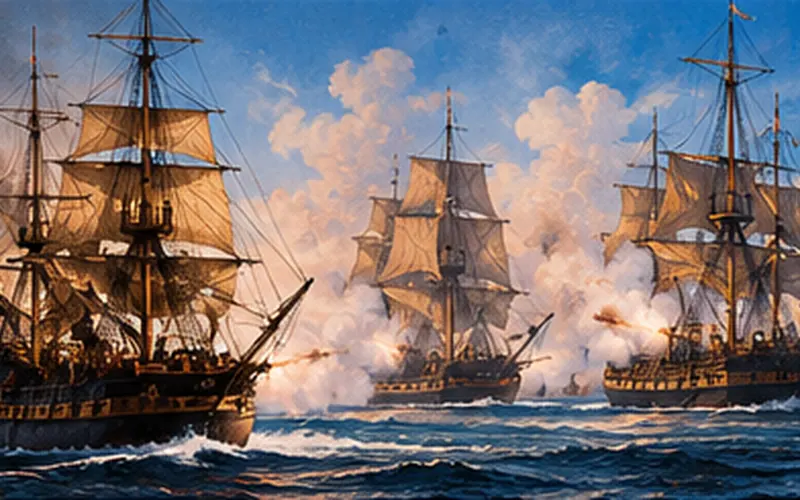
Shortly before midday, the British columns reached the allied line. Collingwood’s Royal Sovereign struck at its rear section, while Victory broke into the centre. At close range, cannon fire tore through decks and rigging, and many ships became locked in fierce individual engagements. Victory damaged Villeneuve’s flagship Bucentaure and then fought the French Redoutable at very short range.
A shot fired from Redoutable struck Nelson while he stood on Victory’s quarterdeck. He was taken below, where he died a few hours later. The fighting continued without him, with Collingwood taking command of the British fleet. By late afternoon the allied formation had collapsed. The result was a decisive British victory, although thousands of sailors on both sides had been killed or wounded.
Consequences and historical legacy
The British lost no ships of the line during the battle, while the combined fleet suffered devastating losses. A severe storm in the following days wrecked or scattered several damaged and captured vessels, making the aftermath dangerous for survivors and their rescuers. Trafalgar did not end the Napoleonic Wars: conflict on land continued for another decade. Nor was an invasion fleet waiting to sail immediately; Napoleon had already shifted his plans away from an imminent cross-Channel operation.
The lasting importance of Trafalgar lies in the balance of naval power. The defeat prevented the French and Spanish fleets from mounting a comparable challenge to British command of the sea and reinforced Britain’s maritime position for decades. For the British public the victory was inseparable from Nelson’s death, and the admiral became a national symbol. HMS Victory survives as a historic ship in Portsmouth, while Trafalgar Day is still marked on 21 October.
Related events
Also on this day

Sources
Illustrations on this page are AI-generated, not archival images.