
October 21, 194581 years ago
French women vote in a national election
Key facts
- Location
France — national election and referendum
- Participants
French voters, including women voting in a national poll for the first time
- Outcome
33 women elected to the Constituent Assembly
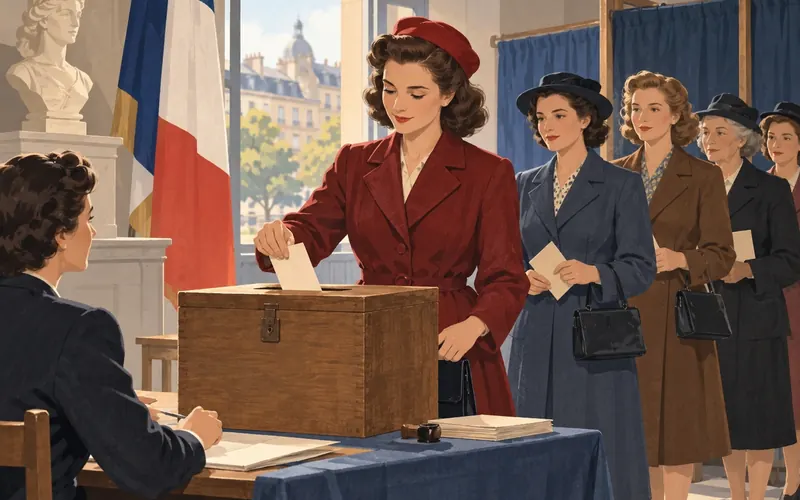
French women voted in a national parliamentary election for the first time, after gaining the right to vote in 1944.
The long struggle for the vote
French women won the right to vote and stand for election through an ordinance of 21 April 1944, issued as France prepared for liberation. The decision followed decades of campaigning and repeated political resistance. It made women formally equal to men as voters and candidates, but their first national election was still ahead.
Women first cast ballots in French municipal elections on 29 April 1945. That milestone is distinct from 21 October: the October vote was their first participation in an election and referendum at the national level. Keeping these two dates separate helps explain how the new right entered political practice.
What happened on 21 October
On 21 October 1945, French voters chose a Constituent Assembly and answered questions in a referendum about the country’s constitutional future. France was emerging from war and occupation, and the institutions of the prewar republic were being reconsidered. Women could now participate directly in deciding the structure of postwar government.
The new Assembly included 33 women among its 586 members. They came from several political movements, including communists, socialists and the Christian-democratic Popular Republican Movement. Their election marked the arrival of female legislators in a national institution, not merely the addition of women to the electorate.
Rebuilding political life
The October election was part of a wider attempt to rebuild France after the Second World War. The Constituent Assembly was tasked with devising a new constitutional order. Parties that had gained prominence through resistance and postwar mobilization competed for influence over how the republic should be governed.
The reforms did not instantly remove social or political inequality. Nevertheless, the inclusion of women as voters and legislators changed who could claim a voice in national decisions. The 1945 vote became a defining moment in the expansion of French citizenship and political representation.
Who the new deputies were
The women elected in 1945 did not come from one profession or one political tradition. Among them were teachers, journalists, lawyers and nurses; several had been active in the Resistance. Their experiences helped bring questions of social protection, employment, education and family life into a parliament rebuilding the country. Representation remained unequal, yet the political landscape had irrevocably changed.
Also on this day



Sources
- Wikipedia — French women vote in a national election
- Wikipedia — French women vote in a national election
- French National Assembly — Constitutional referendum and constituent assemblies
- French National Assembly — Women members of parliament in 1945
- French National Assembly — Timeline of women’s suffrage
Illustrations on this page are AI-generated, not archival images.