
September 26, 1748 – March 7, 1810
Cuthbert Collingwood
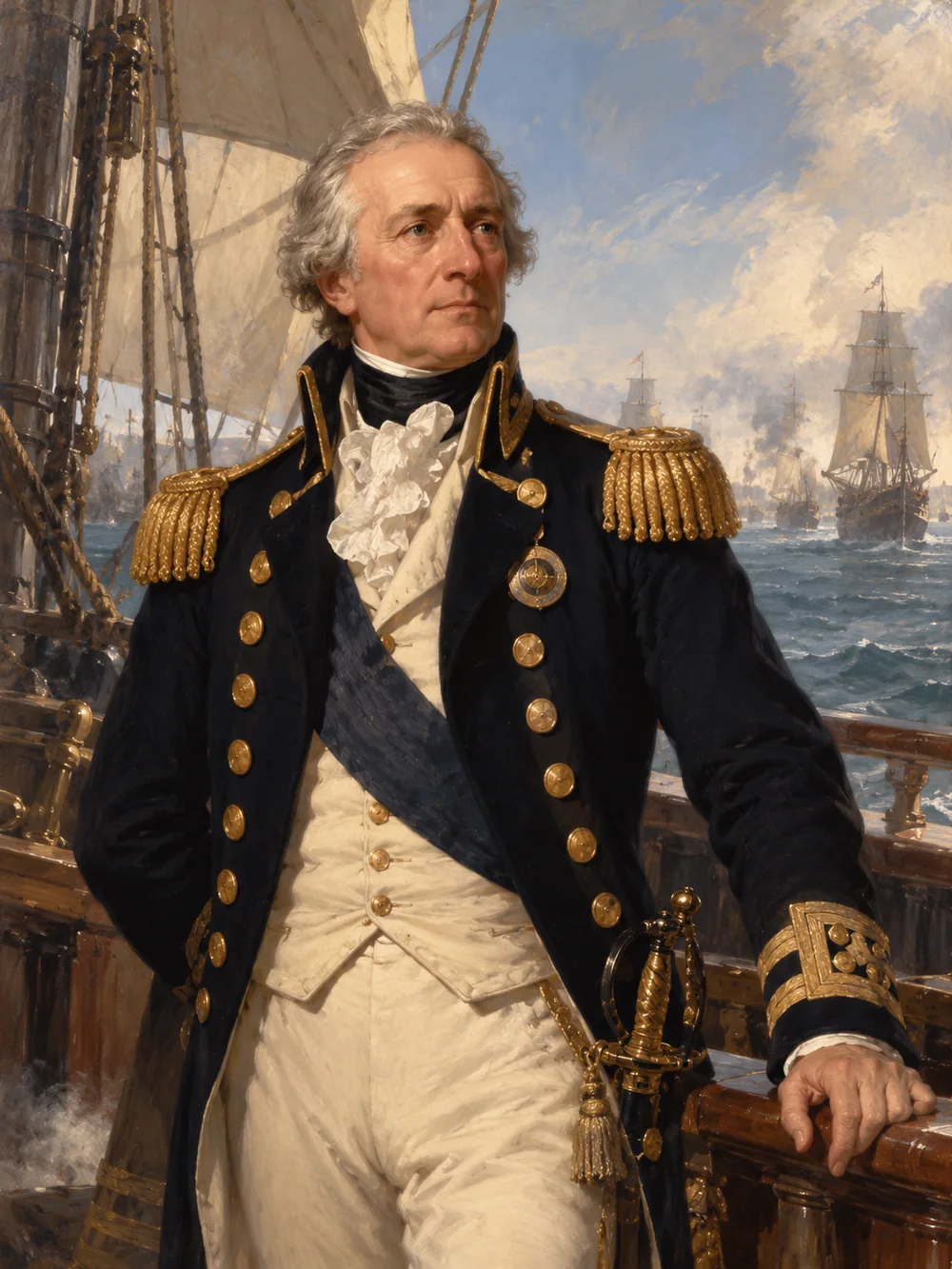
Cuthbert Collingwood (1748–1810) was a British naval officer and one of Horatio Nelson’s most trusted colleagues. At Trafalgar he led the second British column aboard HMS Royal Sovereign and took overall command after Nelson was fatally wounded. His career did not end with the victory: he spent his final years commanding British naval forces in the Mediterranean.
- Born
- September 26, 1748 · Newcastle upon Tyne, England
- Died
- March 7, 1810 · Aboard HMS Ville de Paris, Mediterranean Sea
- Nationality
- British
- Historical role
- Vice-admiral of the Royal Navy; 1st Baron Collingwood
Newcastle and the first years at sea
Collingwood was born in Newcastle upon Tyne on 26 September 1748 and studied at the town’s grammar school. He went to sea in 1761, beginning a career that would keep him away from home for much of his life. His early voyages gave him practical experience long before he held senior command.
During the American Revolutionary War he served in North American and Caribbean waters. He rose to lieutenant in 1775 and became a captain in 1780. His association with Horatio Nelson developed into a professional friendship that would shape their later service.
War with revolutionary France
When war with revolutionary France began in 1793, Collingwood commanded ships of the Royal Navy and took part in the fleet action known as the Glorious First of June in 1794. These operations tested the navy’s ability to maintain blockades and fight large fleets far from friendly ports.
As captain of HMS Excellent, he distinguished himself at the Battle of Cape St Vincent in 1797. He was promoted to rear-admiral in 1799. His reputation rested less on dramatic speeches than on disciplined seamanship, careful preparation and dependable conduct under pressure.
The second column at Trafalgar
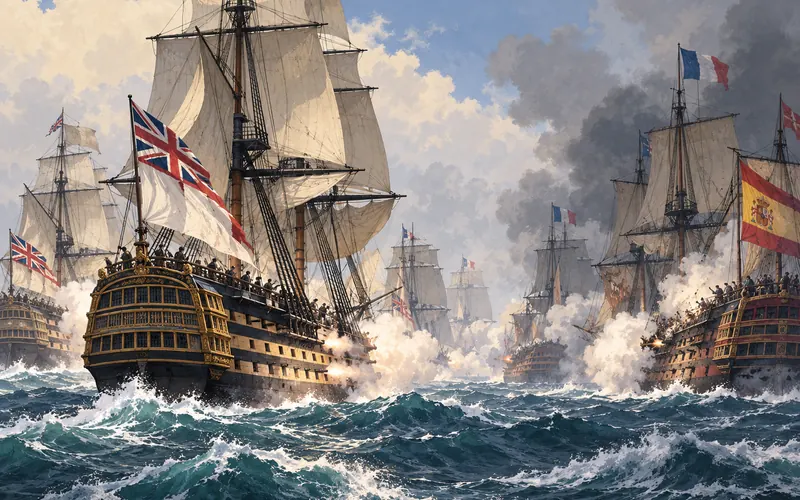
On 21 October 1805 Collingwood commanded the leeward, or second, British column in the Battle of Trafalgar. His flagship HMS Royal Sovereign was the first British ship to break into the combined French and Spanish line. It became heavily engaged before nearby British ships could offer support.
After Nelson was mortally wounded on HMS Victory, Collingwood assumed overall command. The British won a decisive victory, but a storm followed the battle and damaged prizes and ships. Collingwood’s responsibilities included coping with the aftermath, not merely celebrating the success.
The Mediterranean command
After Trafalgar, Collingwood led British naval forces in the Mediterranean. His task involved watching enemy ports, protecting communications and supporting Britain’s position across a changing political landscape. His work was continuous and demanding, with relatively little time ashore.
Collingwood died on 7 March 1810 aboard HMS Ville de Paris while still serving in the Mediterranean. His body was brought back to Britain and buried in St Paul’s Cathedral. He was remembered both for his role at Trafalgar and for the years of command that followed.
Character and legacy
Collingwood worked closely with Nelson, but the two were not identical commanders. His particular strengths lay in steady judgment, organization and persistence. His leadership at Trafalgar showed how much a naval victory depended on more than one celebrated admiral.
The correspondence and service records preserved in British archives allow historians to study Collingwood not just as Nelson’s successor, but as a naval officer whose long career connected several wars and the everyday realities of command at sea.
Historical periods
Events involving this person
Related people
- Horatio Nelson
A close colleague and friend; Collingwood took command at Trafalgar after Nelson was mortally wounded.
Sources
Illustrations on this page are AI-generated, not archival images.