
September 29, 1758 – October 21, 1805
Horatio Nelson
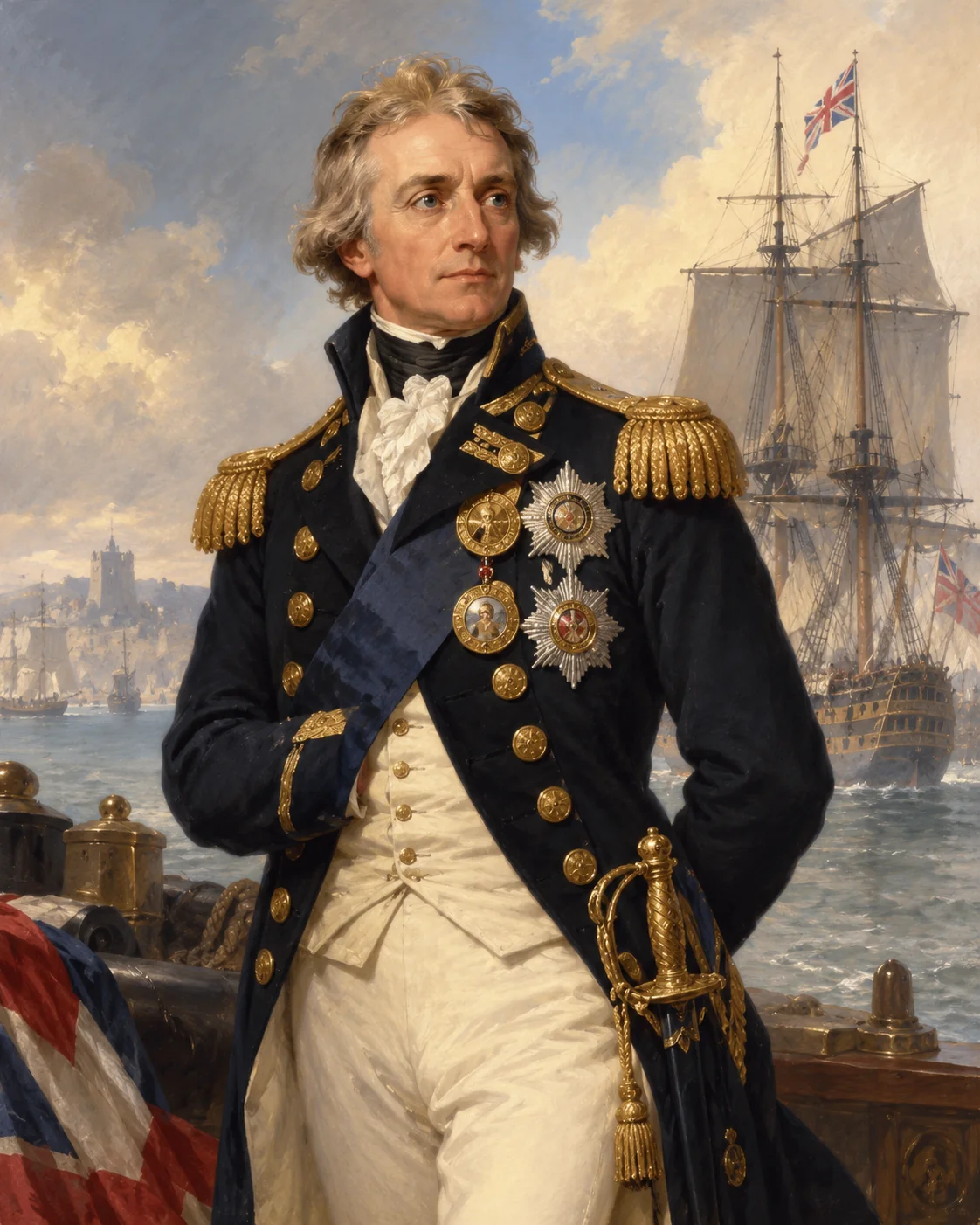
Horatio Nelson (1758–1805) was a British naval commander whose victories at the Nile, Copenhagen and Trafalgar made him one of the most celebrated figures in Britain’s maritime history. A bold tactician and an influential leader, he was killed at the moment of his final victory.
- Born
- September 29, 1758 · Burnham Thorpe, Norfolk, England
- Died
- October 21, 1805 · Aboard HMS Victory, off Cape Trafalgar, Spain
- Nationality
- British
- Historical role
- Vice-admiral of the Royal Navy
Childhood and the first voyages
Nelson was born on 29 September 1758 in Burnham Thorpe, a village in Norfolk. His father was a clergyman, and the young Horatio entered the Royal Navy at the age of twelve with help from his uncle, Captain Maurice Suckling. Naval service demanded practical seamanship, discipline and long periods away from home.
He advanced rapidly through the officer ranks, becoming a lieutenant in 1777 and a captain in 1779. The experience he gained in different waters helped shape a commander who valued initiative and the ability of officers to act decisively when plans changed.
War, wounds and growing fame
During the wars with revolutionary France, Nelson emerged as an aggressive naval commander. He played a notable role in the British victory over Spain at Cape St Vincent in 1797. Earlier, during operations in Corsica in 1794, he had suffered serious damage to the sight of his right eye.
Later in 1797 a failed attack on Santa Cruz de Tenerife cost him his right arm. Despite these injuries, Nelson returned to active command. His personal courage attracted admiration, while his willingness to take risks sometimes placed him at odds with more cautious expectations of naval warfare.
The Nile and Copenhagen
In August 1798 Nelson’s fleet destroyed or captured much of the French fleet at the Battle of the Nile near Aboukir Bay, isolating Napoleon’s army in Egypt. The victory made Nelson internationally famous and demonstrated the strategic importance of controlling sea routes and supply lines.
At Copenhagen in April 1801, Nelson took a leading role in a British attack on Danish naval defences. The battle ended in a British success, though it was fiercely contested. In both campaigns he relied on close action, determined officers and rapid decisions rather than rigid adherence to conventional battle lines.
Trafalgar and his death
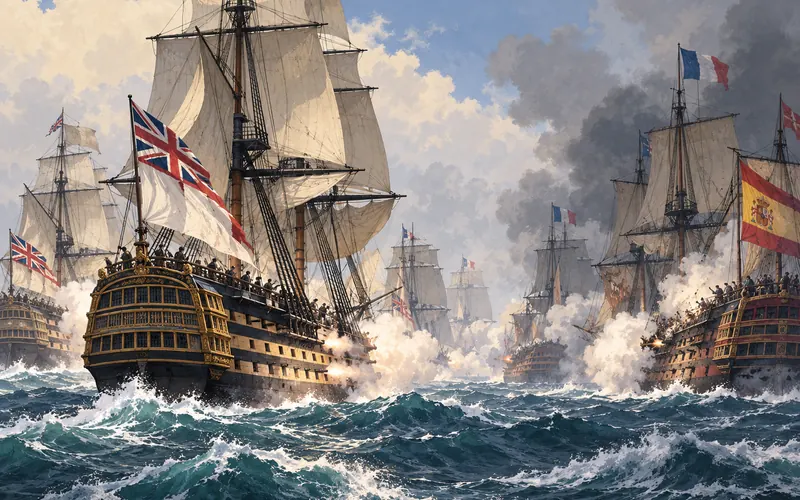
On 21 October 1805, off the coast of Spain, Nelson commanded the British fleet from HMS Victory against a combined French and Spanish fleet. He ordered his ships to advance in columns and break through the opposing line. Vice-Admiral Cuthbert Collingwood led the other British column; Pierre-Charles Villeneuve commanded the allied fleet.
The British won a decisive victory without losing a ship, but Nelson was struck by a musket shot during the fighting and died aboard Victory. His death transformed a military triumph into a moment of national mourning. He was given a state funeral in London and buried in St Paul’s Cathedral.
The man and his legacy
Nelson’s public image combined remarkable military success with a complicated private life. He married Frances Nisbet but later formed a widely discussed relationship with Emma Hamilton, with whom he had a daughter, Horatia. His surviving letters reveal ambition, anxiety, strong personal attachments and an intense awareness of his public reputation.
His victories helped consolidate Britain’s maritime power during the struggle against revolutionary and Napoleonic France. Monuments, paintings and Trafalgar Day ceremonies kept his memory alive, while modern historians also examine the human cost of naval warfare and the contradictions of hero worship.
Historical periods
Events involving this person
Sources
Illustrations on this page are AI-generated, not archival images.