
October 20, 1827199 years ago
Battle of Navarino turns the Greek War of Independence
Key facts
- Location
Navarino Bay
near modern Pylos, Greece
- Participants
Britain, France and Russia; Ottoman and Egyptian forces
- Outcome
Decisive allied naval victory
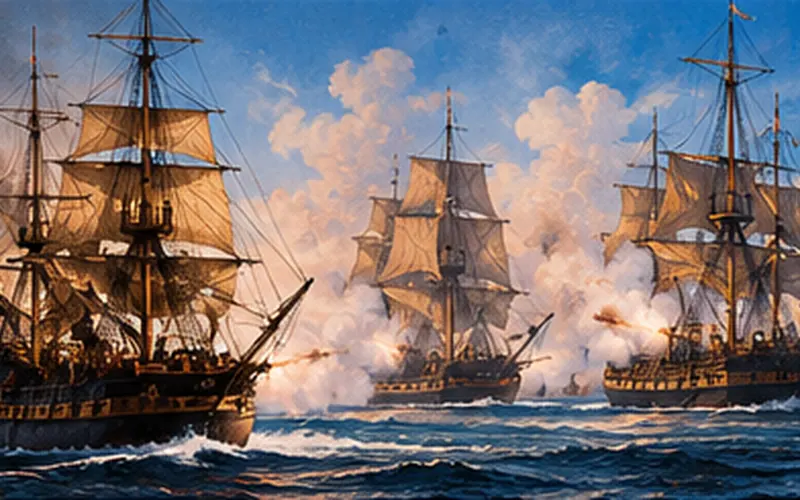
A combined British, French and Russian fleet defeated the Ottoman–Egyptian fleet at Navarino in one of the last major battles fought by wooden sailing warships.
Greece and the European powers
By 1827 the Greek struggle for independence from the Ottoman Empire had been under way for six years. Fighting, repression and humanitarian suffering drew attention across Europe. Britain, France and Russia pursued different strategic interests, yet in July 1827 they agreed in London to seek an armistice and a political settlement. The allied squadrons entered the eastern Mediterranean to press for compliance. Ottoman and Egyptian forces, including those of Ibrahim Pasha, had meanwhile continued operations in the Peloponnese. The confrontation at Navarino grew out of this tense diplomatic and military situation.
The battle in Navarino Bay
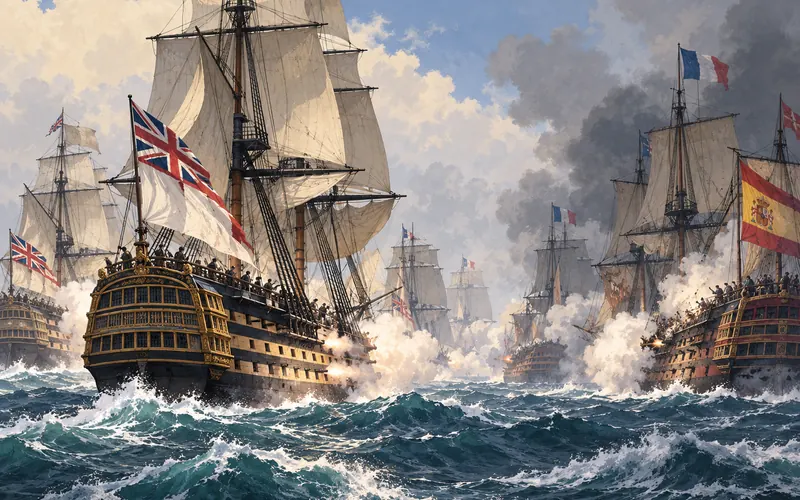
On 20 October 1827 (8 October in the Julian calendar), allied British, French and Russian ships entered Navarino Bay in southwestern Greece. Admiral Edward Codrington commanded the allied force, alongside French commander Henri de Rigny and Russian commander Login Geiden. The Ottoman–Egyptian fleet lay at anchor inside the bay. Fighting broke out at close range after rising tensions and exchanges of fire. The battle was fierce: warships exchanged cannon fire while anchored or moving slowly in confined waters, smoke obscured the view and fires spread among vessels.
Defeat of the Ottoman–Egyptian fleet
The allied force destroyed much of the Ottoman–Egyptian fleet. The loss seriously weakened Ottoman efforts to suppress the rebellion, but Greek independence was not formally established that day. Further diplomacy and military intervention were needed before an internationally recognized Greek state emerged. Navarino is remembered as one of the last major naval battles fought entirely by sailing warships. It also demonstrates how European diplomatic pressure could unexpectedly develop into armed intervention. The fighting cannot be understood solely as a contest of gunnery; its outcome changed the balance of power in the region.
Related events
Also on this day

Sources
Illustrations on this page are AI-generated, not archival images.