
December 31, 1763 – April 22, 1806
Pierre-Charles Villeneuve
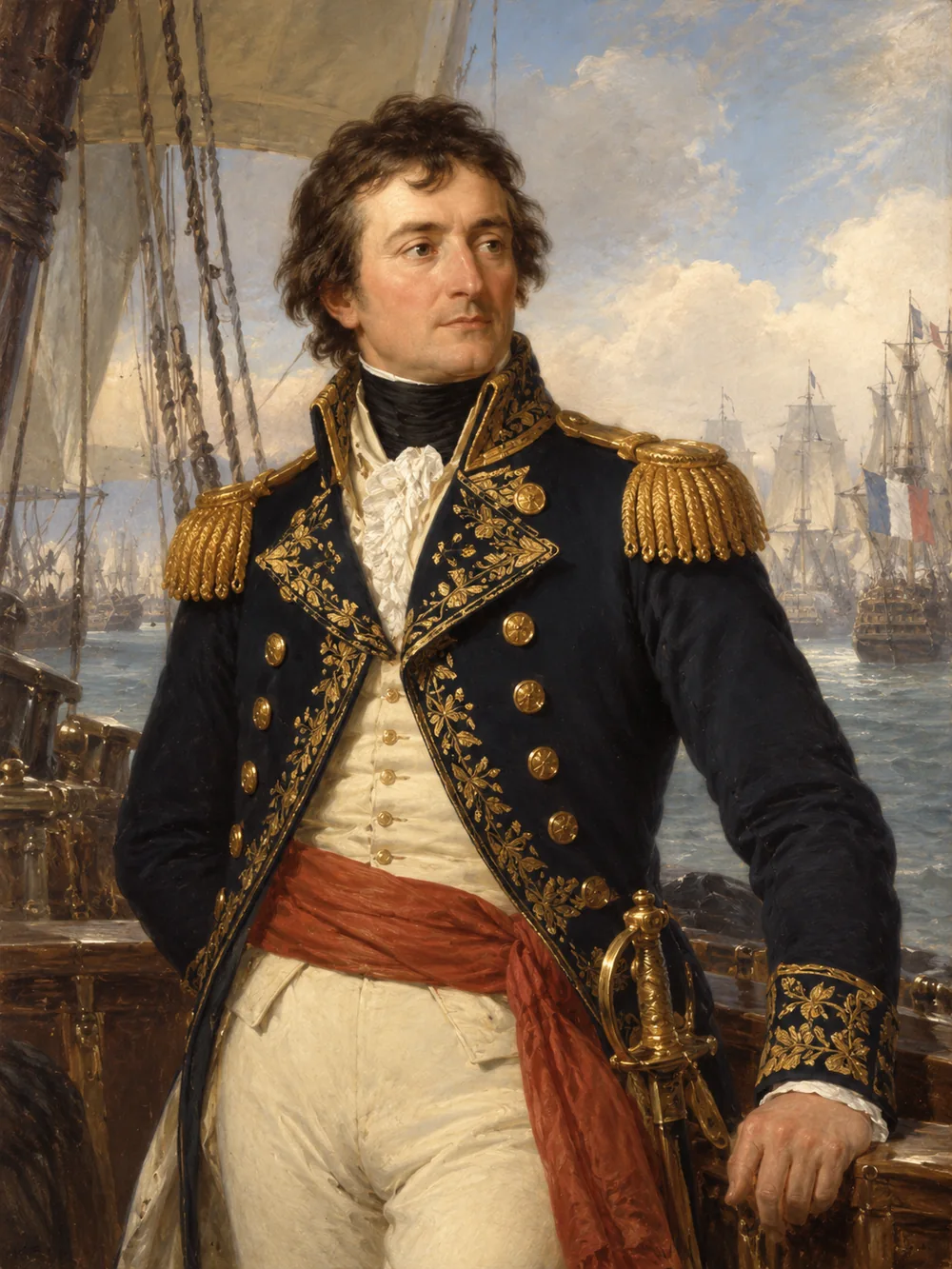
Pierre-Charles Villeneuve (1763–1806) was a French admiral who commanded the combined French and Spanish fleet defeated at Trafalgar in 1805. His career began under the monarchy, survived the French Revolution and culminated in Napoleon’s unsuccessful naval campaign against Britain. He is often remembered chiefly through the defeat, but his story also reveals the pressures facing French naval commanders in the Napoleonic era.
- Born
- December 31, 1763 · Valensole, Provence, France
- Died
- April 22, 1806 · Rennes, France
- Nationality
- French
- Historical role
- Vice-admiral of the French Navy
From Provence to the navy
Villeneuve was born on 31 December 1763 in Valensole, Provence, into a noble family with naval connections. He entered the French naval service in 1778 and served during the American Revolutionary War, including operations in the Caribbean. These voyages formed the practical foundation of his career.
During the French Revolution he remained in France while many naval officers of noble background emigrated. His advancement was interrupted by dismissal in 1793, followed by reinstatement in 1795. In 1796 he became a rear-admiral, during a period when the navy was recovering from political upheaval and loss of experienced officers.
The Nile and the years before Trafalgar
At the Battle of the Nile in 1798, Villeneuve commanded the rear division of the French fleet aboard Guillaume Tell. His part of the line did not engage effectively, and his ships did not prevent the destruction of much of the French fleet. He escaped with a small group of vessels; historians have debated his decisions during the battle.
After further service, Villeneuve was promoted to vice-admiral in 1804 and entrusted with the Toulon squadron. Napoleon’s wider plan depended on manoeuvring French and Spanish ships so that British naval forces could be drawn away from the English Channel, potentially opening the way for an invasion of Britain.
The Atlantic campaign of 1805
In 1805 Villeneuve sailed from Toulon to the Caribbean and back across the Atlantic as part of Napoleon’s naval strategy. On 22 July his fleet fought an inconclusive action against the British under Admiral Robert Calder near Cape Finisterre. Instead of reaching Brest to combine with other French forces, he eventually took the fleet into Cádiz.
In Cádiz the combined fleet was watched and blockaded by the British. Orders from Napoleon and the prospect of replacement placed Villeneuve under growing pressure. He decided to sail out in October, bringing the Franco-Spanish fleet into the path of the British commanded by Horatio Nelson.
Defeat and capture at Trafalgar
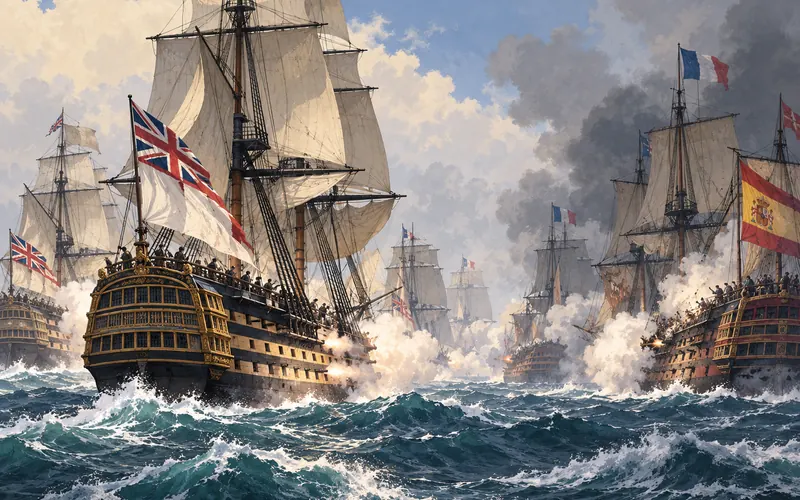
On 21 October 1805, off Cape Trafalgar, the Franco-Spanish fleet confronted Nelson’s British force. The British attacked in two columns, breaking through the allied line. Villeneuve directed the allied fleet from the French flagship Bucentaure, which was badly damaged and eventually surrendered.
The defeat ruined the combined fleet as a fighting force in the campaign. Villeneuve was captured by the British; his opposite number Nelson died from a wound received during the battle. The outcome came to symbolize the contrasting fortunes of the British and French navies during the Napoleonic Wars.
The final months and historical judgment
Villeneuve was released on parole in April 1806. Returning to France, he died in Rennes on 22 April 1806. Contemporary reports and later studies generally identify his death as suicide. His final months unfolded under the shadow of defeat and possible official scrutiny.
Villeneuve’s reputation has long been shaped by the disaster at Trafalgar. Yet assessing his leadership also requires considering the operational problems of coordinating two navies, lengthy blockades and Napoleon’s shifting strategic demands. The evidence supports a critical assessment without reducing the entire campaign to one man’s decisions.
Historical periods
Events involving this person
Related people
- Horatio Nelson
Opposing commanders at the Battle of Trafalgar in 1805.
Sources
Illustrations on this page are AI-generated, not archival images.