
October 20, 194482 years ago
Douglas MacArthur returns to the Philippines
Key facts
- Location
Leyte
Philippines
- Participants
U.S. and Filipino Allied forces; Japanese occupying forces
- Outcome
Start of the Allied liberation campaign on Leyte
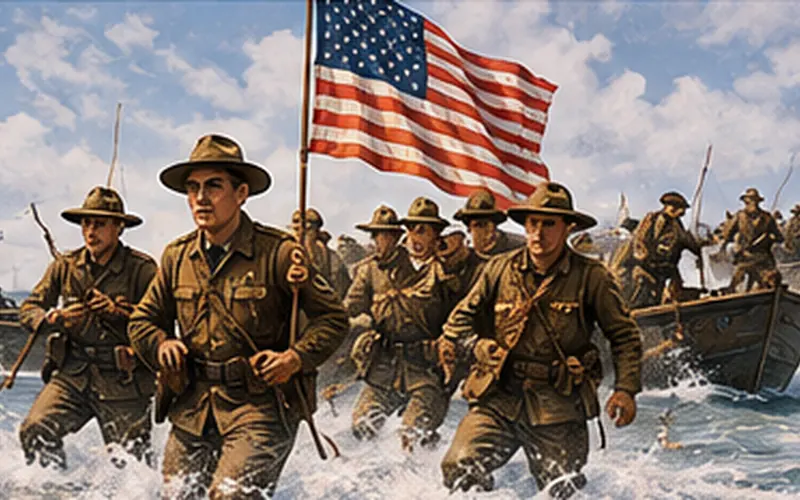
During the Battle of Leyte, General Douglas MacArthur came ashore in the Philippines, fulfilling his famous promise: “I have returned.”
Occupation and a promise to return
Japan occupied the Philippines during the Second World War after the defeat of American and Filipino defenders in 1942. General Douglas MacArthur, ordered to Australia, became known for promising to return. Filipino resistance groups continued fighting under harsh occupation, and civilians suffered greatly. By 1944 Allied forces had advanced across the Pacific, making a return possible. The choice to attack the Philippines involved strategic debates: controlling the archipelago could cut Japanese supply routes, but amphibious operations would require enormous naval and air support.
Landing on Leyte, 20 October
On 20 October 1944 American troops landed on Leyte, supported by a large naval force. MacArthur went ashore later that day and addressed the Filipino people by radio, announcing his return. The moment was recorded in celebrated photographs of the general wading through shallow water. The pictures became powerful propaganda, but the operation was far from complete: troops still had to seize inland positions and secure routes. President Sergio Osmeña, who led the Philippine Commonwealth government in exile, also returned with Allied leaders.
Why the landing mattered
The Leyte landings began a difficult campaign to retake the Philippines. In the days that followed, the Japanese navy tried to attack Allied forces, leading to the enormous Battle of Leyte Gulf. The campaign lasted much longer than the single celebrated landing scene. Its political meaning was also profound: MacArthur’s return signaled the effort to restore the Philippine Commonwealth and end Japanese rule. Yet the fighting continued across many islands, and liberation came with tremendous costs for civilians. October 20 marks a beginning, not the completion, of the reconquest.
The Filipino perspective
The famous scene of MacArthur wading ashore can make the campaign appear centered on one American commander. Yet Filipino soldiers, guerrilla fighters, local communities and political leaders were indispensable to the resistance and the eventual liberation. Years of occupation had left deep wounds, and many civilians faced danger during the reconquest itself. The return of Commonwealth president Sergio Osmeña emphasized that the operation had a political purpose beyond military victory. Remembering October 20 therefore requires attention both to an iconic photograph and to the wider Filipino experience of war, resistance and recovery. The island campaign therefore must be understood through both military operations and Filipino lives.
Also on this day
Sources
Illustrations on this page are AI-generated, not archival images.