
October 25, 197155 years ago
UN General Assembly adopts Resolution 2758 on China’s representation
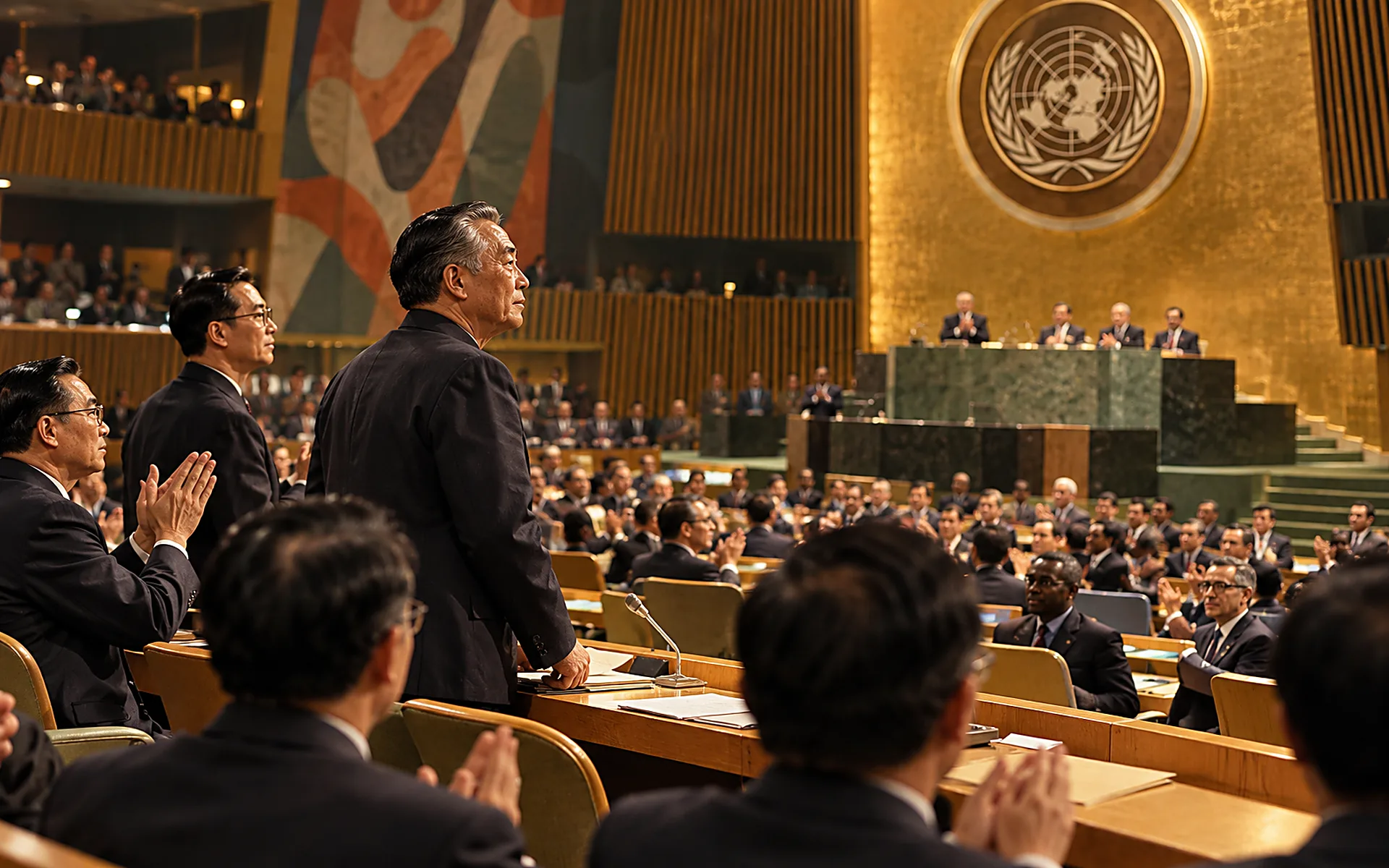
Key facts
- Location
United Nations General Assembly
New York
- Historical period
26th session of the UN General Assembly
- Participants
UN member states; People’s Republic of China; Republic of China representatives
- Outcome
Resolution 2758 adopted 76–35 with 17 abstentions
The UN General Assembly adopted Resolution 2758 by 76 votes to 35, with 17 abstentions. It restored the People’s Republic of China’s rights at the United Nations, recognized its representatives as China’s lawful representatives and removed Chiang Kai-shek’s representatives.
A long dispute over who represented China
When the United Nations was founded in 1945, the Republic of China held China’s seat and later became one of the five permanent members of the Security Council. After the Chinese Civil War, the People’s Republic of China was established on the mainland in 1949, while the Republic of China government continued on Taiwan. For more than two decades, the government in Taipei retained China’s UN representation even though Beijing controlled the mainland and most of the population. The issue returned repeatedly to the General Assembly. By the early 1970s, changing diplomatic recognition and the admission of many newly independent states had altered the voting balance, making a change increasingly likely.
The vote of 25 October 1971
On 25 October 1971 the General Assembly adopted Resolution 2758 at its 1976th plenary meeting. The recorded vote was 76 in favor, 35 against and 17 abstentions, with three members not voting. The resolution stated that restoring the rights of the People’s Republic of China was necessary and recognized the representatives of its government as the only lawful representatives of China to the United Nations. It also decided to remove the representatives of Chiang Kai-shek from the place they occupied at the UN and related organizations. The decision immediately changed who spoke and voted for China in the General Assembly and who occupied China’s permanent seat on the Security Council.
What the resolution changed — and what the text says
Resolution 2758 remains one of the most consequential representation decisions in UN history. It settled the institutional question of which government represented China in the United Nations. Discussions today often extend beyond that wording to questions involving Taiwan’s international status and participation in international organizations. For historical accuracy it is important to distinguish those later legal and political arguments from the resolution’s actual text. The document speaks directly about the representatives of the People’s Republic of China, the representation of China in the UN and the removal of Chiang Kai-shek’s representatives. Its adoption reshaped diplomacy at the United Nations and reflected the major geopolitical changes that had accumulated since 1949. It also demonstrated how changes in diplomatic recognition and UN membership could alter the institutional balance of the organization without changing its Charter.
Also on this day



Sources
Illustrations on this page are AI-generated, not archival images.