
October 24, 1861164 years ago
First transcontinental telegraph is completed
Key facts
- Location
United States: Salt Lake City connection; message from Sacramento to Washington
- Outcome
First continuous telegraph connection across the United States
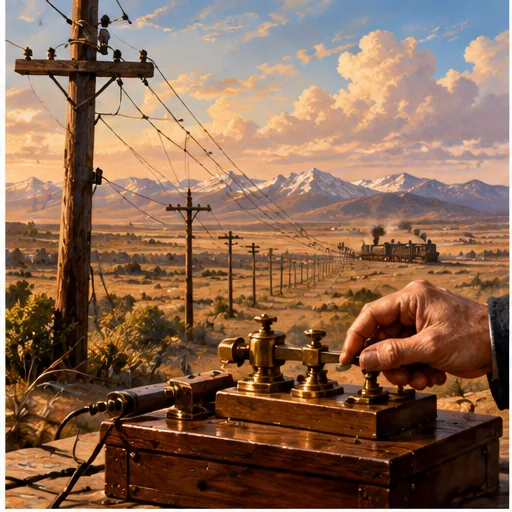
The telegraph line across the United States was completed, linking the Pacific coast with the existing eastern network. A message from California to President Abraham Lincoln showed how electrical communication could cross the continent far faster than horseback mail.
Communication across a continent
Before 1861, sending news between California and the eastern United States could take days or weeks. Stagecoaches, ships and the Pony Express carried information over great distances, but weather and the terrain imposed severe limits. Telegraph networks already covered much of the East, while the Pacific coast developed its own lines. The missing connection across mountains and plains was a technological and organizational challenge made more pressing by the Civil War that had begun earlier in the year.
24 October and the first messages
On 24 October 1861 the transcontinental connection was completed near Salt Lake City. Brigham Young sent a message westward, while the first message spanning the continent went from Sacramento to President Abraham Lincoln in Washington. It was written by California jurist Stephen J. Field and expressed support for the Union. The message was dispatched that evening and reached Lincoln the following morning. The timing marked an enormous reduction in the delay that had separated distant regions of the country.
How the network worked
Telegraph operators converted messages into electrical signals transmitted along long wires, supported by poles and relay stations. Building the line required moving materials across remote terrain and keeping equipment working after storms or damage. Communication was not instantaneous in the modern digital sense: operators had to receive, decode and forward messages. Nevertheless, the completed network turned distant centers of government, commerce and news into participants in a much faster shared conversation.
A new information age
The telegraph rapidly reduced the importance of some long-distance courier services, including the Pony Express, which ceased operations shortly afterward. It also changed expectations about news: information that once arrived long after an event could now reach newspapers and officials much sooner. This new infrastructure did not remove political divisions or the distances people had to travel, but it helped integrate far-apart markets and institutions. It anticipated later communications revolutions, from the telephone to the internet.
Also on this day


Sources
Illustrations on this page are AI-generated, not archival images.