
October 24, 192996 years ago
Black Thursday shakes Wall Street
Key facts
- Location
New York Stock Exchange
New York City
- Outcome
Stock-market panic and exceptional trading
further collapse followed on 28–29 October
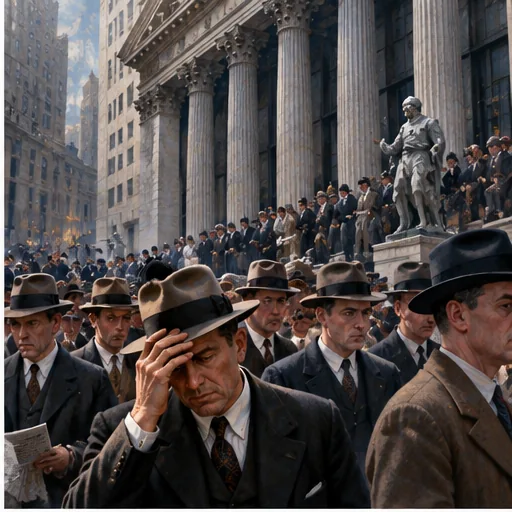
Panic selling overwhelmed the New York Stock Exchange on 24 October 1929, a day remembered as Black Thursday. Bankers temporarily supported prices, but the turmoil continued the following week and became a landmark in the stock-market collapse preceding the Great Depression.
The market before the panic
During the 1920s, share prices in the United States climbed dramatically. Investors, businesses and lenders increasingly treated rising prices as a sign of permanent prosperity. Buying stocks with borrowed money allowed speculation to expand, but it also made investors vulnerable when quotations fell. There were warning signs during September and early October 1929. Once confidence began to weaken, the same credit and expectations that had amplified the boom could accelerate a retreat.
What happened on 24 October
On Thursday, 24 October, waves of sell orders overwhelmed the New York Stock Exchange. Prices dropped rapidly in the morning, and trading volume reached exceptional levels. Prominent financiers arranged purchases aimed at restoring confidence, and prices recovered some ground later in the day. This temporary improvement did not mean the danger had passed. News of the turmoil spread internationally and alarmed people who had considered the market a reliable symbol of American economic strength.
Black Monday and Black Tuesday
The most dramatic additional falls came on 28 and 29 October, days often called Black Monday and Black Tuesday. Their scale is one reason historians distinguish the broader crash from the first panic on the 24th. The market did not simply fall in a straight line on one day; it suffered repeated waves of fear, selling and attempts at stabilization. Understanding the sequence helps avoid the misleading claim that the Great Depression began and fully unfolded on a single Thursday.
From a market crash to economic crisis
The crash damaged wealth and confidence, reducing spending and investment. But economists emphasize that the Great Depression had several causes and became especially severe as banking troubles and economic contraction deepened after 1929. Governments and central banks debated how to respond, and later generations studied the crash for lessons about speculation, lending and financial stability. Black Thursday remains a vivid starting point for explaining a complex, international economic disaster rather than its sole cause.
Also on this day



Sources
Illustrations on this page are AI-generated, not archival images.