
October 25, 198343 years ago
Operation Urgent Fury begins in Grenada
Key facts
- Location
Grenada
Caribbean
- Historical period
Cold War
- Participants
United States and Caribbean partner forces; Grenadian forces; Cuban personnel
- Outcome
The intervention removed the military regime and evacuated U.S. citizens
it also exposed major joint-command problems
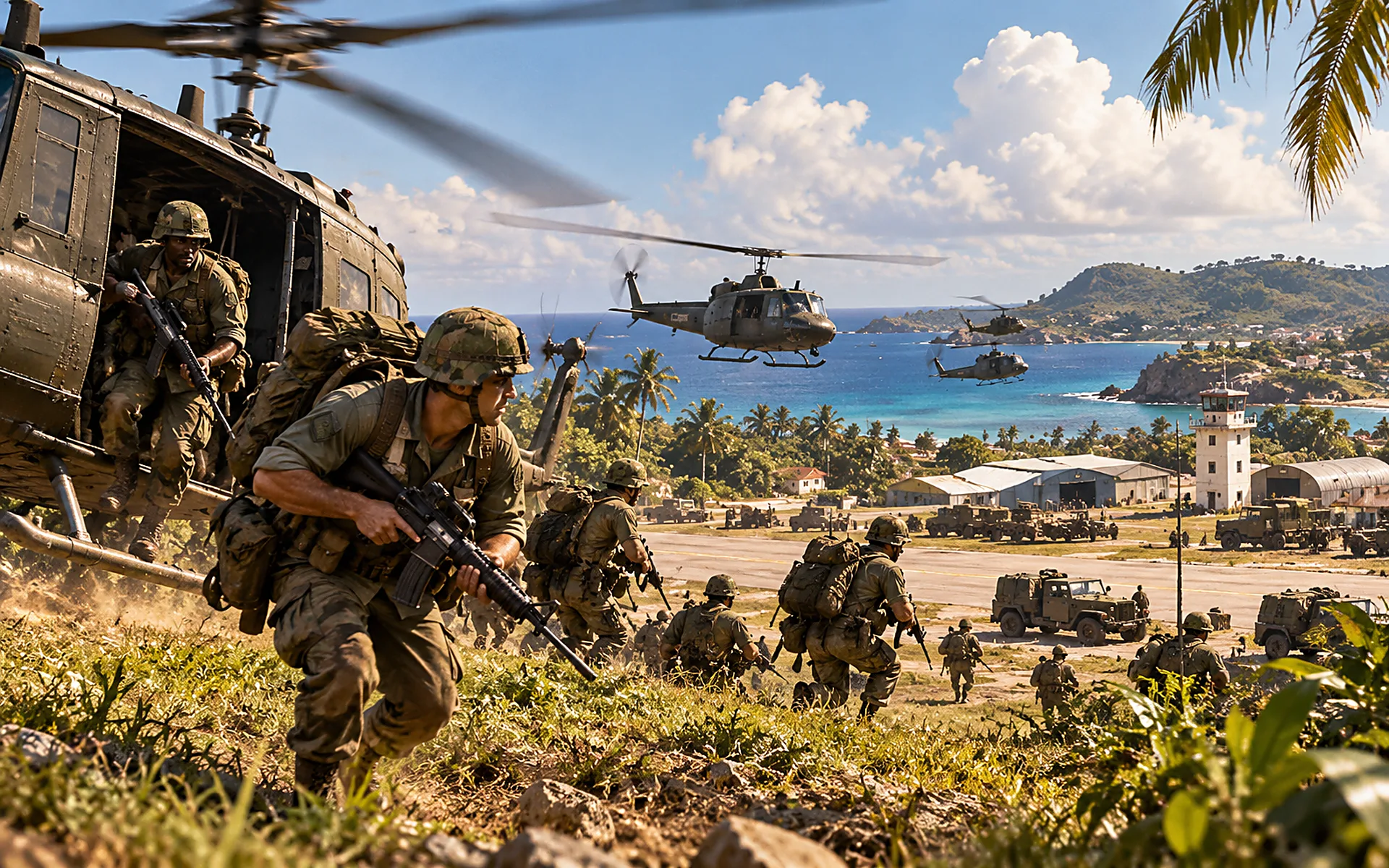
U.S. and Caribbean forces landed on Grenada after a violent political crisis and the killing of Prime Minister Maurice Bishop. American Rangers parachuted near Point Salines as the multinational intervention began, encountering stronger resistance and coordination problems than planners expected.
A political crisis on a small Caribbean island
Grenada entered a severe political crisis in October 1983. Prime Minister Maurice Bishop, leader of the left-wing New Jewel Movement government, was placed under house arrest during an internal power struggle and was killed with several supporters on 19 October. A military council took control and imposed a curfew. The United States was also concerned about hundreds of American medical students on the island, Grenada’s close ties with Cuba and the Soviet bloc, and the construction of a long runway at Point Salines. Members of the Organization of Eastern Caribbean States requested outside assistance. President Ronald Reagan approved a U.S.-led multinational military operation that was organized in only a few days.
The landings begin on 25 October
Operation Urgent Fury began before dawn on 25 October. U.S. Army Rangers were originally expected to land at Point Salines, but reconnaissance showed construction equipment blocking the runway, so the plan shifted to a parachute assault. Rangers jumped near the airfield under fire, secured the runway and moved toward locations connected with the medical school. Marines operated in the north, while special operations forces, naval units and aircraft supported missions across the island. Resistance came from Grenadian forces and armed Cuban personnel. The operation quickly achieved many of its immediate objectives, but the first days were more difficult than planners had expected and included friendly-fire incidents, communications failures and problems sharing intelligence among different services.
Military success and political controversy
U.S. and partner forces gained control of the island within days and the American students were brought to safety. A new political order followed, and elections were later held. The operation was nonetheless controversial internationally. The Reagan administration argued that it had acted to protect lives and in response to requests from regional governments, while critics questioned the legality and necessity of the invasion. For the U.S. military, Grenada also became an institutional lesson. Army histories emphasize the serious shortcomings in joint planning, communications and logistics revealed by the operation. Those problems contributed to the broader debate that later produced reforms intended to improve cooperation among the armed services. Urgent Fury was therefore both a short combat operation and an important case study in modern U.S. joint warfare.
Also on this day

Sources
Illustrations on this page are AI-generated, not archival images.