
October 25, 194482 years ago
The Battle off Samar erupts during the Battle of Leyte Gulf
Key facts
- Location
Off Samar
Philippines
- Historical period
Battle of Leyte Gulf, World War II
- Participants
U.S. escort-carrier group Taffy 3; Japanese Center Force
- Outcome
Taffy 3 survived the attack
Japanese Center Force withdrew
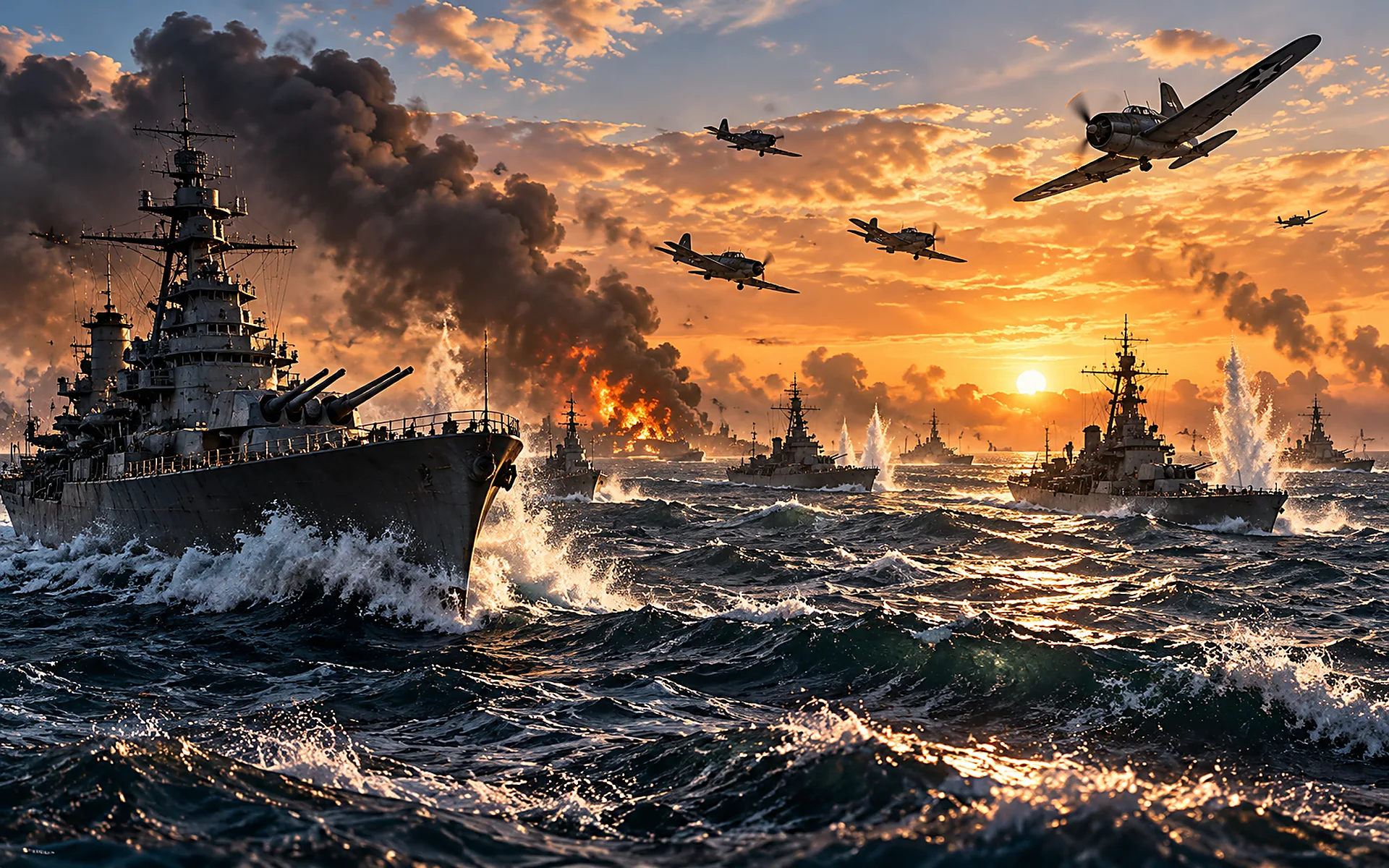
A powerful Japanese surface force surprised the much smaller U.S. escort-carrier group “Taffy 3” off Samar. Destroyers, destroyer escorts and carrier aircraft fought desperately until the Japanese force withdrew, making the action one of the dramatic episodes of Leyte Gulf.
A gap in the Allied screen
The Battle off Samar was part of the huge Battle of Leyte Gulf, fought around the Allied return to the Philippines. Japanese planners tried to converge several naval forces on the invasion area. On 24 October, U.S. carrier aircraft struck the powerful Japanese Center Force in the Sibuyan Sea and it appeared to turn away. Admiral William Halsey then took his Third Fleet north after Japanese carriers that were being used as a decoy. During the night the Center Force reversed course, passed through San Bernardino Strait and emerged east of Samar. At dawn on 25 October it found not Halsey’s fast battleships but the small escort carriers, destroyers and destroyer escorts of U.S. Seventh Fleet task units supporting troops ashore.
Taffy 3 fights a much stronger force
Rear Admiral Clifton Sprague’s Taffy 3 consisted of six escort carriers, three destroyers and four destroyer escorts. The Japanese force included battleships, cruisers and destroyers, among them Yamato with the largest naval guns then in service. Sprague ordered his carriers to turn away, launch every available aircraft and seek cover in rain squalls. The small destroyers Johnston, Hoel and Heermann, joined by destroyer escorts, attacked aggressively with guns and torpedoes to disrupt Japanese formations. Carrier aircraft repeatedly attacked even after many had expended their bombs and torpedoes. The U.S. ships suffered severe losses, including Gambier Bay, Hoel, Johnston and Samuel B. Roberts, yet the resistance created confusion and delayed the Japanese advance.
Why the Japanese force turned away
Vice Admiral Takeo Kurita eventually ordered the Center Force to break off and move north, then retreat through San Bernardino Strait. Historians point to several factors: the unexpectedly fierce U.S. resistance, repeated air attacks, losses among Japanese cruisers, uncertainty about the identity of the American force and the wider operational picture. Taffy 3 had not destroyed the Japanese fleet, but it had helped prevent the Center Force from reaching the vulnerable invasion shipping in Leyte Gulf. The action became celebrated in U.S. naval history because lightly armed ships accepted extreme risk against much heavier opponents. It also illustrates how imperfect information and disrupted command decisions can matter as much as raw firepower in a naval battle.
Also on this day

Sources
Illustrations on this page are AI-generated, not archival images.