
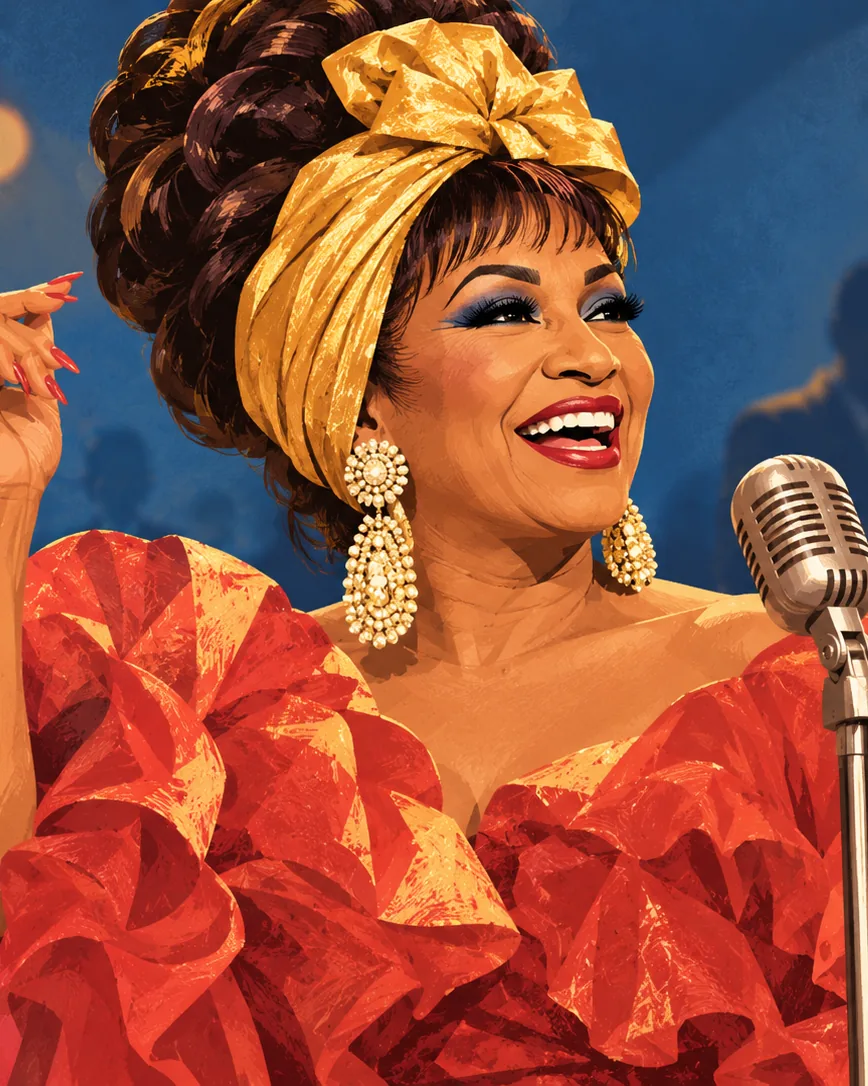
Celia Cruz (1925–2003) was a Cuban-born singer whose commanding voice and vivid stage presence made her one of the best-known artists in Latin music. Rising to fame with La Sonora Matancera, she later became a defining figure in salsa and brought Afro-Cuban musical traditions to international audiences.
- Born
- October 21, 1925 · Havana, Cuba
- Died
- July 16, 2003 · Fort Lee, New Jersey, United States
- Nationality
- Cuban American
- Historical role
- Singer and performer; Queen of Salsa
Growing up with music in Havana
Cruz was born on 21 October 1925 in Havana and grew up in the working-class neighborhood of Santos Suárez. Cuban popular music was part of daily life around her. As a young woman she sang for family and local audiences and began attracting attention through radio performances and amateur contests.
Her musical interests led her to vocal training and professional performances. Cuba’s lively radio and dance-music scene gave aspiring singers opportunities to work with established musicians. Cruz developed a style combining rhythmic precision, improvisation and a strong, expressive voice.
Breakthrough with La Sonora Matancera
In 1950 Cruz joined La Sonora Matancera, one of Cuba’s leading dance orchestras, as its main female singer. The group recorded and toured extensively. Her interpretations of guaracha and other Afro-Cuban styles earned her the affectionate nickname La Guarachera de Cuba.
Working within a popular orchestra taught Cruz how to hold large audiences through voice, timing and personality. Recordings and concert tours widened her reputation beyond Havana, making her recognizable throughout Latin America before her later career in the United States.
Leaving Cuba and building a new career
Cruz left Cuba with La Sonora Matancera during a tour in 1960, after the Cuban Revolution. She later settled in the United States and built a new professional life while remaining deeply attached to Cuban music and identity. Exile became an enduring theme in how audiences understood her career.
In the United States Cruz worked with musicians who were shaping a new Latin dance-music scene. The sound that came to be called salsa drew on Cuban son and other Caribbean traditions, especially in New York. Her established reputation and dramatic singing made her a natural star within this evolving movement.
The Queen of Salsa
During the 1970s Cruz recorded and performed with major figures including Tito Puente and Johnny Pacheco, and appeared with the Fania All-Stars. These collaborations brought her to even wider audiences. Her performances combined demanding rhythms with elaborate stage clothes, humor and energetic communication with listeners.
Her exclamation “¡Azúcar!” became a signature of her public persona. Cruz was especially prominent as a woman in a musical field often dominated by male bandleaders and singers. She continued to record and tour for decades, becoming a symbol of both salsa music and the Cuban diaspora.
Recognition and legacy
Cruz received major music honors, including Grammy and Latin Grammy awards, and her impact was recognized far beyond the recording industry. Her recordings, costumes and personal memorabilia have entered museum collections, reflecting the cultural role of a performer whose music crossed national and linguistic boundaries.
She died in Fort Lee, New Jersey, on 16 July 2003. For listeners across the Americas and beyond, her voice remains linked to celebration, resilience and a shared Caribbean musical heritage. The title “Queen of Salsa” captures both her extraordinary popularity and her lasting influence on the genre.
Sources
Illustrations on this page are AI-generated, not archival images.